Studio Success in a Small Town with Rachel Eidson
There's a version of this story you've probably told yourself.
If I can just get through the startup phase, it'll get easier. If I can just survive COVID, I'll be okay. If I can just get more teachers, I'll have more time to work on the business.
Here's the deal—the problems don't stop. They evolve. And the studio owners who make it nine, ten, fifteen years aren't the ones who found a phase where everything was easy. They're the ones who figured out how to lead through every new version of hard.
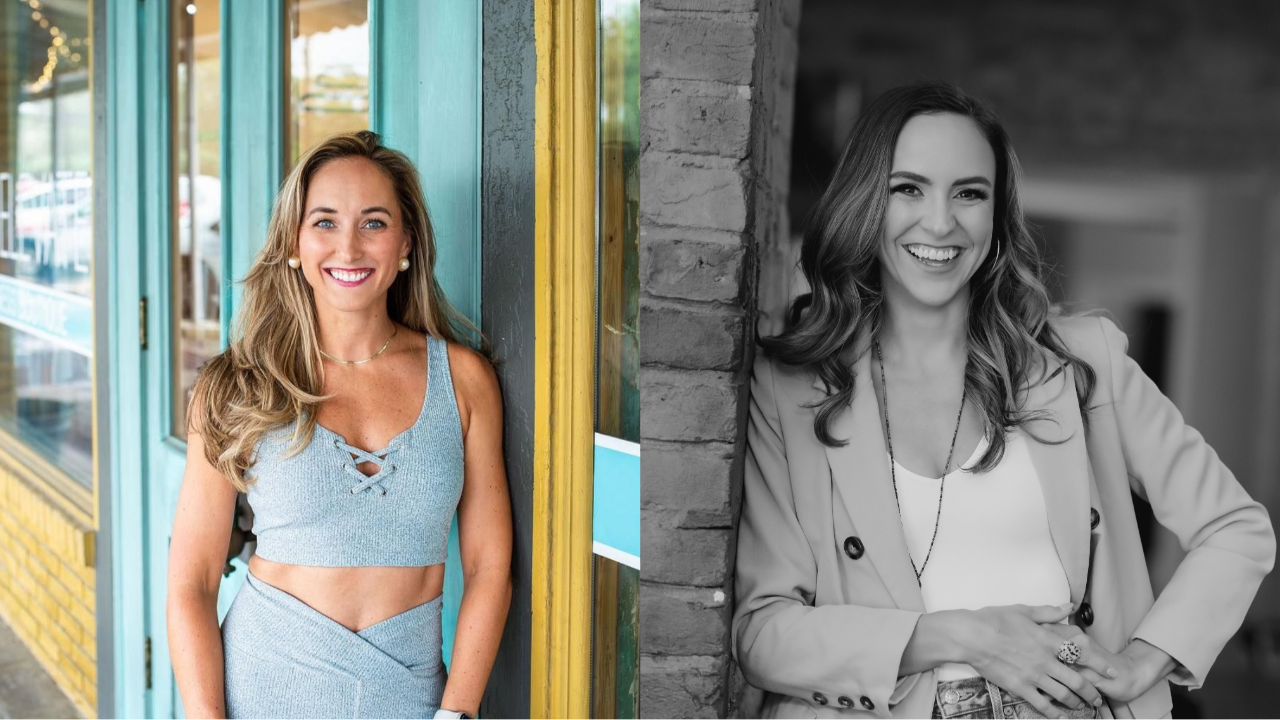
Rachel, owner of Elevate Coleman—a barre, yoga, and Buti yoga studio in a small Southern town in Alabama—is one of those owners. She's been running her studio for nearly a decade. She opened with a six-month-old at home. She survived COVID. She watched competitors move in. And she just launched her first teacher training program.
I sat down with her on the podcast recently, and y'all, this conversation has something for every stage of studio ownership.
She Didn't Have a Business Plan. She Had a Notebook and 50 Names.
Before Rachel signed a lease, she did something that a lot of studio owners overthink: she validated her idea with the most basic math possible.
No software. No fancy spreadsheet. No ChatGPT.
She sat down with a notebook—her infant son dozing next to her—and started writing down every person she'd met who might be interested in what she was building. She got to about 50 names. Then she asked: if these 50 people paid X for a membership, what could my rent be?
That's it. That was the business plan.
She took that number to a landlord, was told no, found another space, negotiated down to the rate she needed, and signed.
Was it scary? Yes. Did she have doubt? Absolutely. But she also had enough signal—a year of weekly pop-up classes, people who kept coming back, strangers who were willing to pay—to know that the market existed.
If you're sitting on a studio idea waiting for perfect clarity before you commit, I want you to hear this: the clarity came from the action, not before it. Start with a list. Do the math. Get a proof of concept. Then move.
Every Studio Goes Through Three Phases (And Each One Has Its Own Hard)
One of the most useful things Rachel said in our conversation was this: looking back on nearly a decade, her studio has gone through three distinct phases. And each one had its own version of difficult.
Phase one: Startup. Everything is new. You're figuring out your systems, your pricing, your team, your marketing. The business is young and so is your understanding of it. For Rachel, this overlapped with having very young children at home—which added a whole other layer of complexity.
Phase two: COVID survival and recovery. Rachel opened in 2017, which means she had three strong years before the world shut down in 2020. And here's something she said that I think gets overlooked: boutique fitness studios—especially yoga and Pilates—had a longer recovery period than big box gyms. Because their clients are often rule-followers. Conscientious. They waited. Recovery took at least three years.
Phase three: Stable growth in competition. Two and a half years ago, Elevate Coleman was no longer the only boutique studio in town. The market grew, and so did the competition. This phase requires something the first two didn't: clarity on differentiation. You can't use the same messaging you used in year one. You have to know—specifically—who you're for and why they should choose you.
Here's what I see in the Studio CEO Program all the time: owners come in after ten, fifteen, even twenty years open, and they're experiencing a dip. Not because they're doing something wrong, but because the industry is growing fast and they haven't updated their positioning. If competition is moving into your market, your first job is to get clear on what makes you the obvious choice for a specific person. That's not an identity crisis. That's a CEO-level decision.
She Thought She Was Good at T-Ball. The Mastermind Showed Her There Was a Whole Other Game.
Rachel found me through this podcast during the COVID recovery era. She started from the beginning—which, honestly, I love—joined some workshops, went through the Studio CEO Program, and eventually joined the Grow Mastermind.
Here's how she described that transition:
"If they were playing baseball, I've been in T-ball. Doing good in T-ball."
That is one of my favorite things a client has ever said, because it captures something so real. The Studio CEO Program is the map—it shows you where you are, what's working, what needs to change. The Mastermind is what happens when you get in a room with other studio owners who are scaling in real time. You see what's possible. You realize the level you're at isn't the ceiling.
That's not demoralizing. That's clarifying.
Rachel also said something important about why the Mastermind worked for her when a previous coaching program hadn't: it was built for owners who look like her. One and two-location studios. People who might be picking up their kids after school. Business owners who want to grow sustainably—not blow it up and burn out.
That distinction matters. Growth that doesn't fit your life isn't growth. It's just a different kind of chaos.
Your Best Teachers Are Already in Your Classes
One of my favorite parts of Rachel's story is how she finds and develops her teaching team.
She doesn't post job listings and hope. She watches.
She pays attention to how students absorb instruction, how they process what they're hearing, how they move through the room. She can see the teacher in someone before that person sees it in themselves. Then she invites them to lunch—her words were "it was like asking someone on a date"—and plants the seed.
She has a StrengthsFinder strength called Arranger, which is basically the gift of knowing how to put the right people in the right rooms. But even if you haven't done StrengthsFinder, the principle is available to everyone: be present in your studio. Watch your people. Think about what's possible for them. Then ask.
When I visited Rachel's studio in person for a VIP on-site visit, I took a Buti yoga class with a teacher she'd developed this way. That teacher had zero background in Buti yoga—she came from barre. But Rachel saw something in how she connected the pieces of her barre class and sent her to get trained.
The class was exceptional. Fluid sequencing, great music, a teacher who was clearly in her element.
That's what happens when you stop waiting for the perfect hire to show up and start developing the talent that's already in your building.
She Launched the Teacher Training Before She Was Ready. That Was the Right Call.
Rachel had been informally training teachers for years. She had materials. She had a process. She just hadn't packaged it into something people could pay for.
When it came up in a coaching session, she mentioned it offhand and kept moving. I made her stop.
Because here's what I see studio owners do all the time with teacher trainings: they push the launch date eighteen months out because the manual isn't finished, or the curriculum isn't perfect, or they want to wait until they're less busy. And in the meantime, they stay short-staffed, they keep teaching too many classes themselves, and they keep waiting for a version of ready that will never actually arrive.
Rachel launched. She updated what she already had—about a week of focused work on materials that already existed. She sent some emails. She recruited a group of five people who were excited and committed.
Was it the Dallas Cowboys Cheerleaders? No. Was it version one? Yes. And version one out in the world is worth infinitely more than version ten that never launches.
If you've been sitting on a teacher training idea and telling yourself you'll do it in a year or two—I want you to ask yourself honestly: is that a strategic decision, or is it a perfectionist delay?
Because your studio needs those teachers now. Not in 2027.
CEO First. Teacher Second.
The thread running through Rachel's entire journey is this: the moment she stopped thinking of herself primarily as a teacher and started thinking of herself as a CEO, everything shifted.
That doesn't mean she stopped teaching. She still teaches. She loves it.
But she got honest about something a lot of us in this industry resist: teaching feels comfortable. It's familiar. It's where we built our identity. And so when there's strategic work to be done—ads to run, trainings to launch, systems to build—we will unconsciously drift back to the mat because that's where we feel competent.
The CEO shift isn't about quitting what you love. It's about being clear that your primary job is growing the business. Teaching supports that. It is not the job.
Rachel said it best: "My job is CEO first. Teaching supports that."
That one sentence is worth the listen.
Connect with Rachel
You can find Rachel and Elevate Cullman at elevatecullman.com or on Instagram at @elevatecullman. Her personal account—where her Australian Shepherd steals the show—is @bamabarrebabe.
If this episode resonated with you and you're ready to figure out which phase your studio is in and what to do next, the Studio CEO Program is the place to start. And if you're already running a solid operation and you're ready to scale with a group of serious studio owners around you, come check out the Grow Mastermind.
This is the kind of conversation that reminds me why I love this work. See you in the next episode.